

Pneumatic Part Feeders (PPF) are automated conveying systems that use controlled airflow to transport lightweight parts through enclosed tubing between process stations. Rather than relying on mechanical transfer methods, PPF systems utilize a motor-driven air blower to generate the airflow required to move parts efficiently while maintaining a controlled delivery rate.
The conveying system typically consists of a hopper, air blower, conveying tubing, and delivery point, allowing parts to be transported over distances of hundreds of feet while accommodating complex production layouts. Adjustable airflow controls enable conveying rates to be matched to the requirements of the application, helping maintain consistent part delivery throughout the production process. Pneumatic Part Feeders are commonly used in automated closure handling and other applications requiring reliable delivery of lightweight components.
Because the system operates through enclosed tubing with relatively few moving components, Pneumatic Part Feeders provide a clean, compact conveying solution that can be integrated into a wide variety of automated manufacturing and packaging environments.
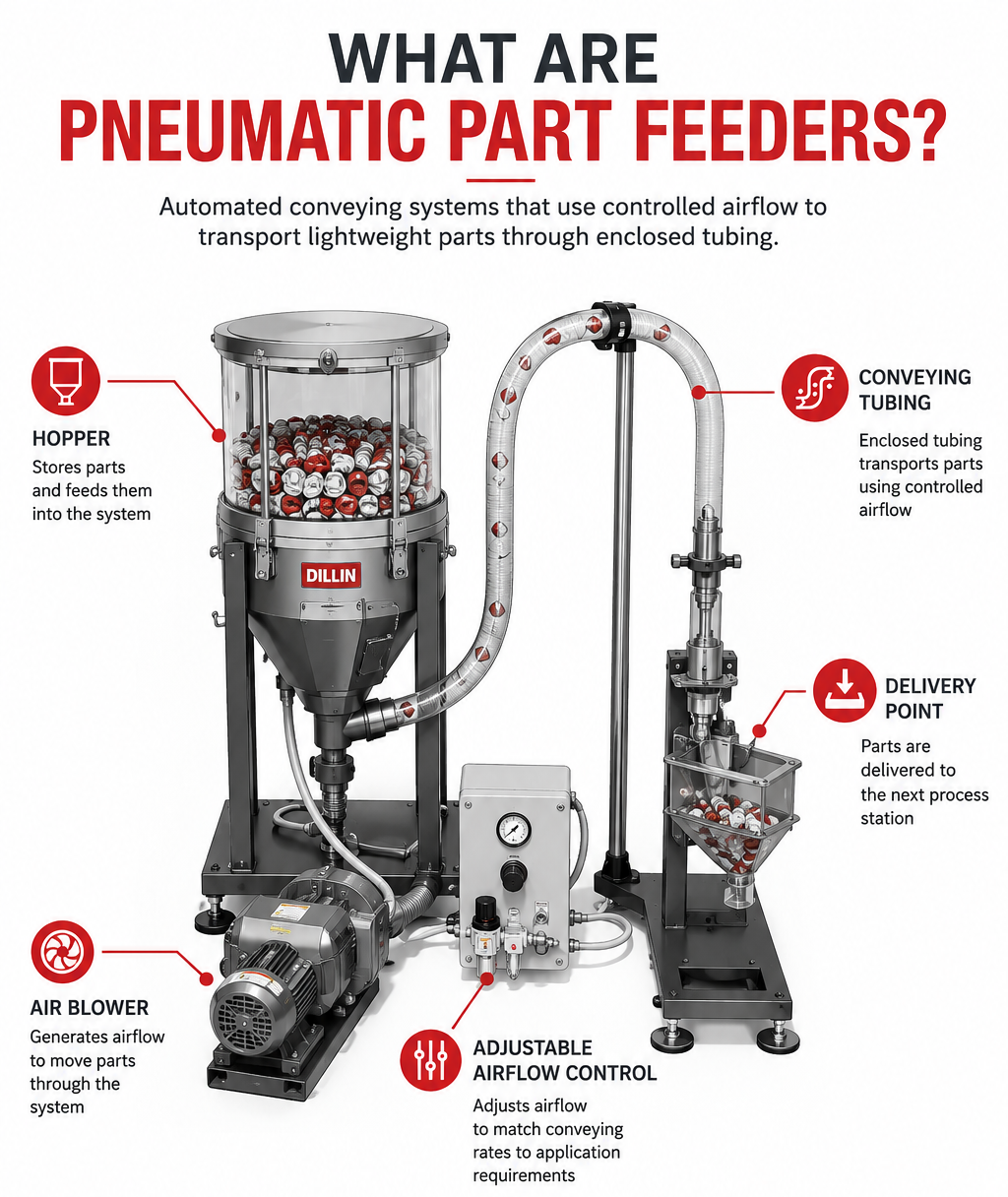

Selecting the right Pneumatic Part Feeder involves more than choosing a conveying system—it requires a solution engineered around your production requirements. Dillin works closely with manufacturers to configure Pneumatic Part Feeders that integrate seamlessly with existing packaging equipment while supporting long-term operational performance.
Every system is designed to match the specific characteristics of the application, including part type, conveying distance, production throughput, available space, and controls integration. Combined with durable construction, configurable options, and decades of automation experience, Dillin’s Pneumatic Part Feeders provide a dependable solution for modern closure handling applications.
Eliminates unnecessary manual handling, increasing production efficiency.
Space-saving construction with reliable operational stability.
Suitable for various small parts, including caps, fitments, and liners.
Allows conveying rates to be matched to changing production requirements for reliable downstream delivery.
Efficiently transports caps and small parts through enclosed tubing across extended production layouts while maintaining consistent product flow.
Ensures longevity and meets hygiene regulations.
Routine filter changes minimize downtime and keep operations running smoothly.
Simplified controls offer ease of use and reliability.
Special tubing design prevents static build-up, ensuring safe and effective part delivery.
Transparent tubing allows easy visual inspection of parts in motion.
Choose from various models with capacities including 3.8 cuft, 15.5 cuft, 24.3 cuft, 30 cuft, or 60 cuft to match your production needs.
Pneumatic Part Feeders are designed to handle a wide range of lightweight components used in automated packaging and closure handling applications. Commonly conveyed parts include plastic and metal caps, liners, fitments, corks, capsules, and other lightweight molded components, with system configurations tailored to the specific characteristics of each application.
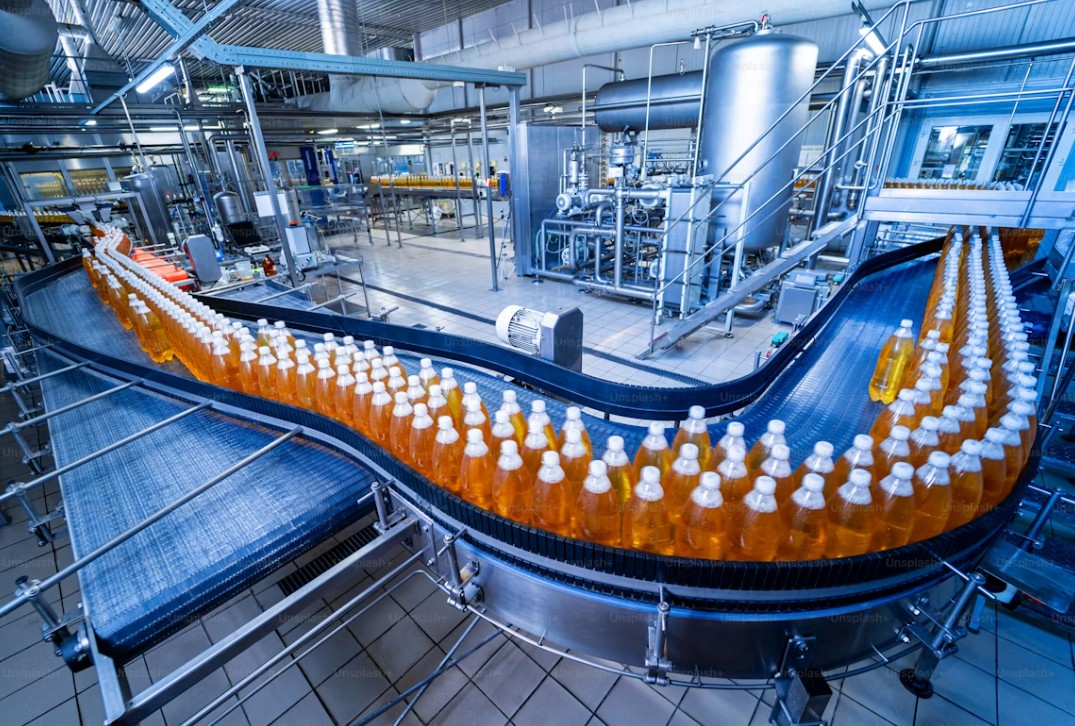
Ideal for cap conveying in bottling plants, handling plastic or metal caps efficiently.
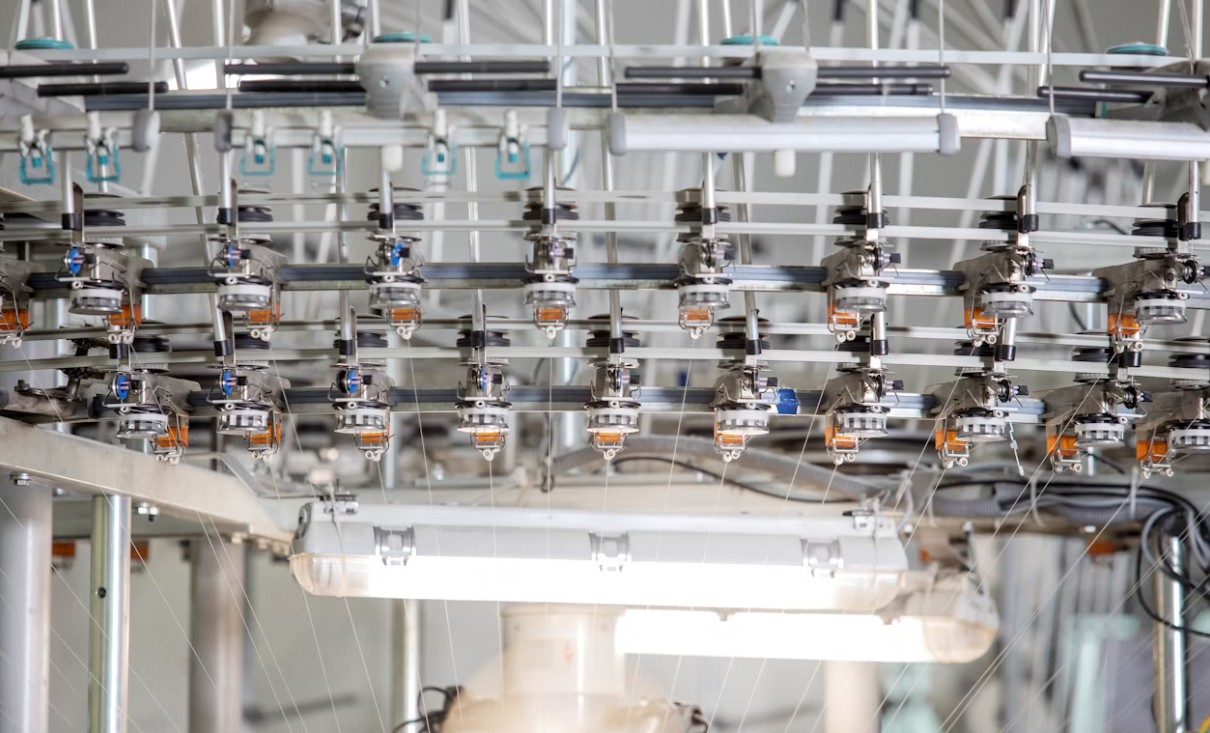
Maintain hygiene standards with pneumatic cap blowers that minimize contamination risks.
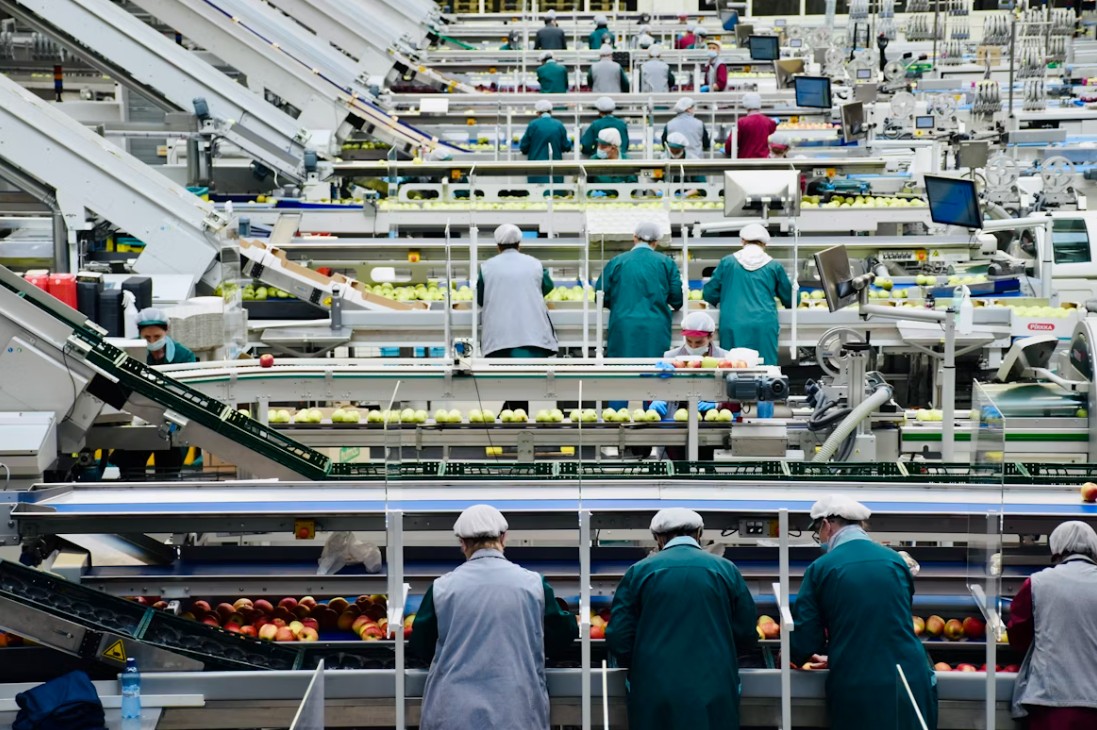
Ensures smooth operation on packaging lines, handling delicate closures for lotions and shampoos.
Durable and adaptable for transport systems for caps in complex manufacturing environments.
Selecting the appropriate part feeding method depends on the production environment, product characteristics, and overall packaging line requirements. Pneumatic part feeding offers several advantages for applications involving lightweight closures and components.
Because parts are transported through enclosed tubing using controlled airflow, system layouts can be more flexible while reducing the need for multiple mechanical transfer devices. This approach also helps simplify routing between processing stations, particularly in production lines where equipment may be separated by significant distances.
For many closure automation applications, enclosed conveying provides improved visibility of product flow, supports cleaner operation, and helps reduce opportunities for product damage during transport. Specialized tubing designs can also minimize static electricity build-up in applications where electrostatic discharge may affect conveying performance.
| Operational Requirement | Why Pneumatic Part Feeding Is Often Selected |
|---|---|
| Long Conveying Distances | Parts can be conveyed through enclosed tubing over extended distances while maintaining controlled product flow. |
| Limited Floor Space | Flexible tubing routes around existing equipment, helping maximize available production space. |
| Multiple Process Stations | Supports efficient part delivery between separated machines without requiring complex mechanical transfer systems. |
| Hygienic Production Environments | Stainless steel construction and optional HEPA filtration support clean manufacturing operations. |
| Lightweight Closures & Components | Well suited for conveying caps, liners, fitments, corks, capsules, and other lightweight molded parts. |
| Flexible Production Layouts | Configurable routing allows the system to adapt to a wide variety of packaging line configurations. |
Dillin Automation offers a range of customization options to tailor PPF systems to your specific application:
Preheat caps that require enhanced flexibility during the capping process.
Ensure product purity with 99.97% efficiency in removing fine airborne particles.
Facilitate part delivery to multiple lines for streamlined production.
Provide an automated bulk transfer solution for increased productivity.
Enhance system intelligence with real-time monitoring and diagnostics.
A lightweight option for standard applications.
Ideal for harsh environments and stringent hygiene requirements.
Choose from 4", 6", or 8" diameters to suit your system's needs.
Every Pneumatic Part Feeder is engineered around the specific requirements of the application, including production throughput, conveying distance, available space, and integration with surrounding equipment.
By combining durable construction with configurable system options, Dillin delivers pneumatic conveying solutions that support long-term operational reliability while accommodating future production requirements.
Every packaging operation has unique conveying requirements. Dillin’s engineering team works closely with manufacturers to configure Pneumatic Part Feeders that integrate seamlessly with existing packaging equipment while supporting long-term production objectives.
Whether you’re installing a new closure automation line or upgrading an existing system, we’ll help you identify the right Pneumatic Part Feeder configuration for your application.
Pneumatic Part Feeders are commonly used to transport plastic and metal caps, liners, fitments, corks, capsules, and other lightweight molded components. Product suitability depends on the size, weight, geometry, and conveying requirements of the application.
Yes. Depending on the production layout and system design, optional diverters can distribute parts to multiple production lines or downstream equipment.
Yes. Stainless steel construction and optional HEPA filtration make these systems suitable for applications where cleanliness and product protection are important.